

Best Plastic Business Cards for Construction Companies: 12 Durable Designs That Win More Jobs
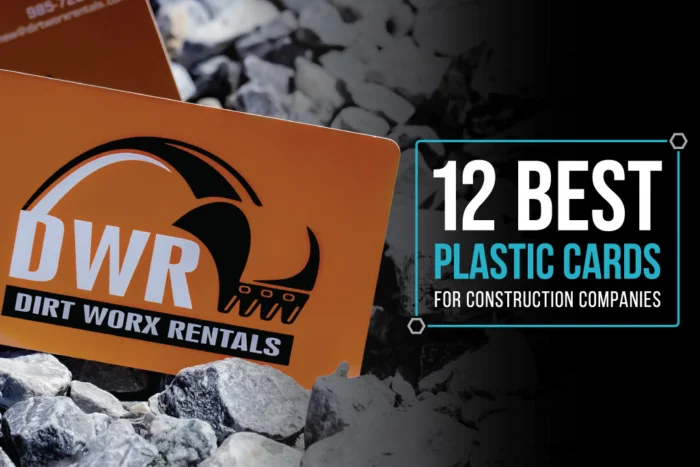
Plastic business cards for construction companies need to do more than look professional. They need to keep up with a hands-on industry.
Contractors, builders, roofers, landscapers and other trades don’t always exchange cards across a conference table. Cards get handed out at job sites, left with homeowners, carried in work trucks and tucked into wallets alongside everything else that comes with a day on the job.
That makes plastic business cards a natural fit for the construction industry. They’re durable, professional, and offer far more design flexibility than most people expect from a business card.
But durability is only part of the equation.
A great construction business card also needs to make your company easy to recognize, easy to contact and easy to remember when the next project comes up.
Here are 12 ways contractors can put plastic business cards for construction companies to work.
1. Matte Black for a Strong, Professional Look
Black doesn’t need much help to make an impact.
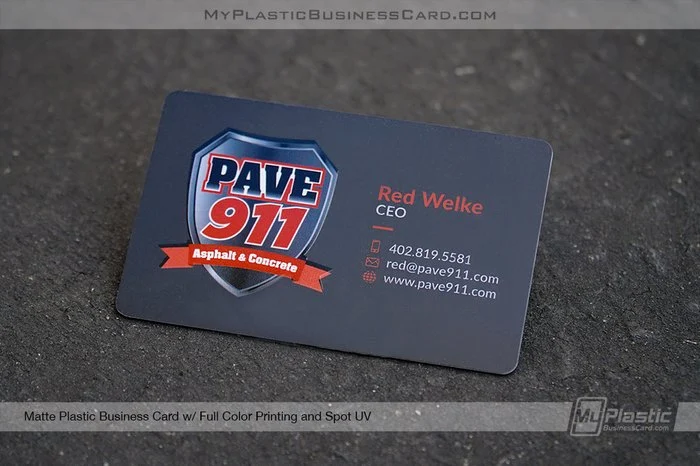
Matte black plastic business cards for construction companies create a clean backdrop for bold company colors, logos and contact information. It’s particularly effective for construction brands already using strong reds, oranges, yellows, or whites in their visual identity.
The PAVE 911 card above is a great example. The dark background lets the red, white, and blue branding do the work without making the card feel overly busy.
For contractors who want their card to look established and professional without getting too flashy, matte plastic is an easy place to start.
Best for: paving companies, concrete contractors, general contractors and commercial construction companies.
2. Turn Your Logo into a Custom Cutout
If your company has a recognizable logo or symbol, why keep it entirely two-dimensional?
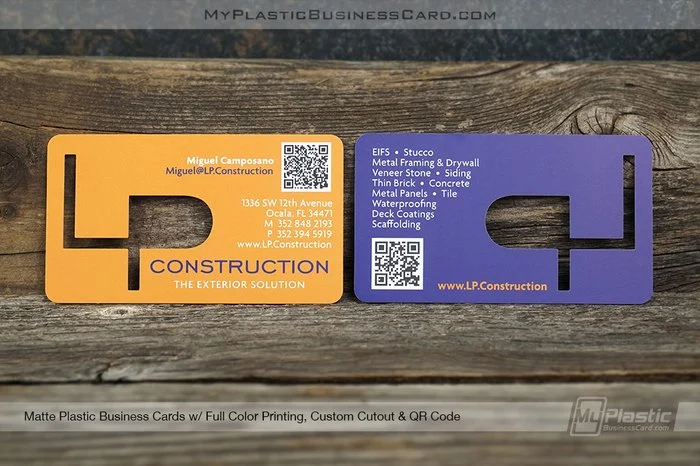
Custom cutouts can incorporate part of the brand directly into the physical shape of the card. Instead of simply printing a logo onto plastic, the card itself becomes part of the design.
The LP Construction example shows just how dramatic this can be. The oversized cutout creates an immediate visual connection to the company’s branding while still leaving plenty of room for contact information and QR codes.
It’s the kind of card someone is likely to look at twice—and that’s exactly the point.
Best for: established contractors with distinctive logos or simple geometric brand marks.
3. Put a QR Code Front and Center
Sometimes the most valuable thing on a construction business card isn’t a phone number. It’s the next step.
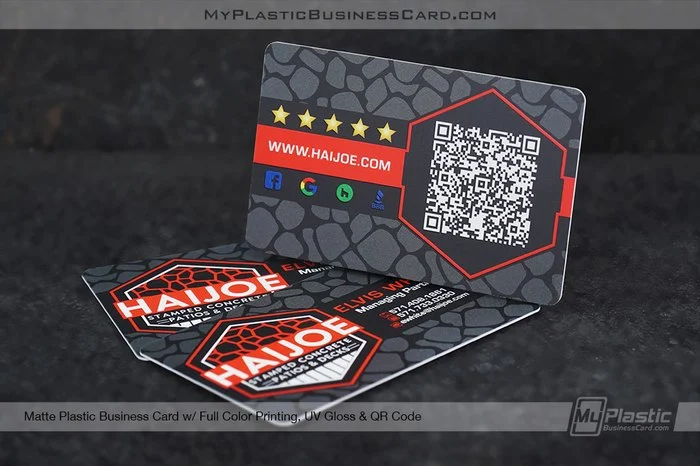
A QR code can send potential customers directly to a website, estimate request, project gallery, contact page or other online destination.
For construction companies, that can be especially useful because prospects often want to see examples of completed work before making a call.
Instead of trying to fit your portfolio onto a 3.5″ x 2″ card, give people an easy way to get there.
Design tip: Give your QR code enough breathing room. Making it a deliberate part of the layout is generally better than squeezing it into whatever empty corner remains.
4. Use Spot UV to Make the Logo Pop
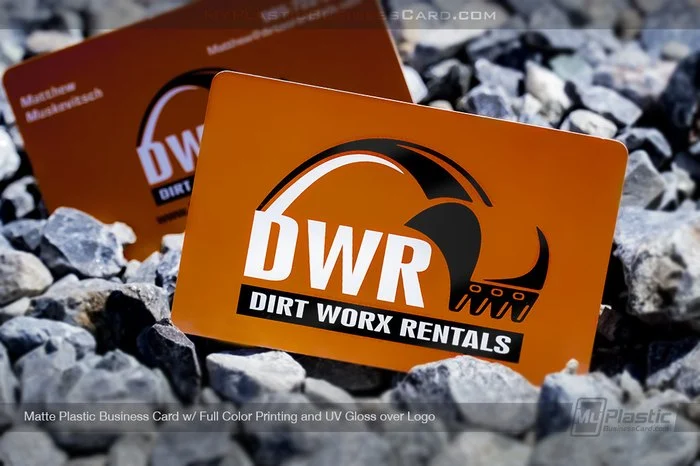
A matte card doesn’t mean every part of the card needs to be matte.
Spot UV creates glossy contrast on selected areas of a design, allowing a logo, pattern or other detail to catch the light against the surrounding finish.
That makes it especially useful when your construction company’s branding is relatively simple. Instead of adding more graphics or colors, you can add visual interest through texture and sheen.
The Dirt Worx Rentals example does exactly that, using gloss over the logo to add another layer to an otherwise bold, straightforward design.
Best for: equipment rental companies, excavation businesses, contractors and brands with large, graphic logos.
5. Use Foil for a More Premium Position
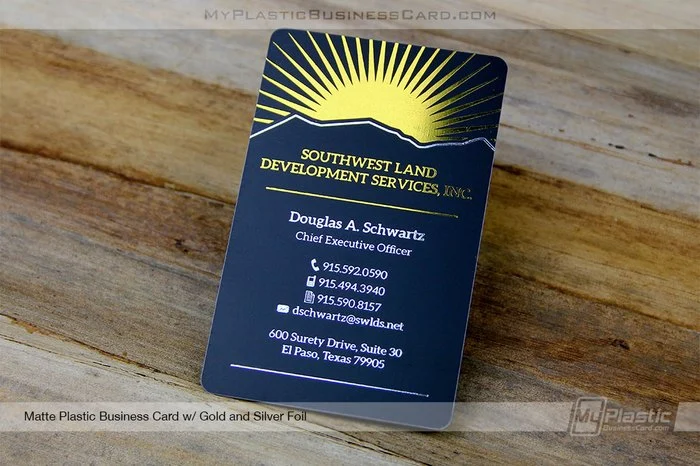
Not every construction company is trying to communicate the same thing.
If your business specializes in luxury homes, commercial development, high-end remodeling or large-scale projects, your card may need to feel a little more elevated.
Gold or silver foil can introduce that premium element without abandoning the practicality of a plastic card.
Against a dark matte background, metallic foil can be particularly effective for logos, company names and important design details.
Best for: developers, architects, custom home builders and luxury remodeling companies.
6. Clear Plastic Business Cards for Construction Companies – A Completely Different Look
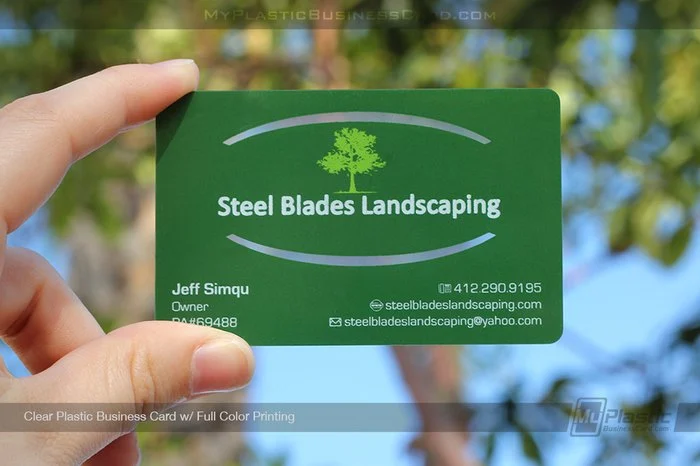
Construction cards don’t have to look rugged to belong in the construction industry.
Clear plastic offers a modern alternative that immediately looks different from a conventional paper card. With the right design, transparent areas become part of the artwork itself.
The Steel Blades Landscaping example uses its green branding against clear plastic for a card that feels clean, simple, and closely connected to the company’s outdoor identity.
This approach can work especially well when your branding already relies on a strong color palette or simple logo.
Best for: landscapers, pool contractors, outdoor living companies and design-forward construction brands.
7. Let Project Photography Sell the Work
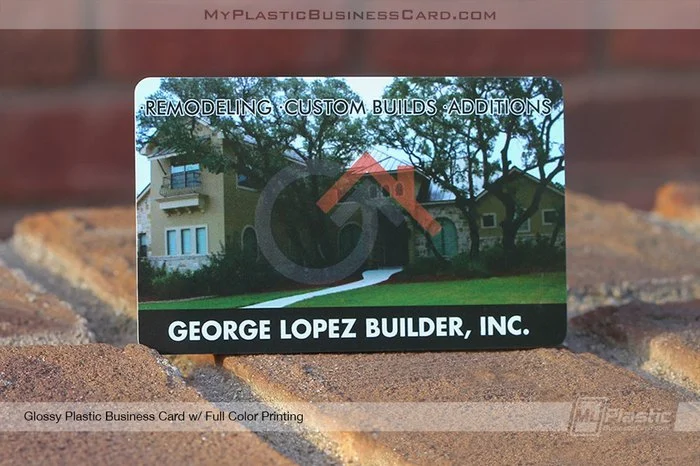
For builders and remodelers, sometimes your best design element is the work itself.
Full-color plastic printing gives construction companies the option to incorporate project photography directly into their business cards. A custom home, finished kitchen, commercial property or landscape project can provide instant context for what your company does.
Rather than simply telling someone you’re a builder, you can give them a glimpse of what you build.
The key is restraint. Choose one strong image rather than trying to create a miniature portfolio.
Best for: home builders, remodelers, landscapers, pool builders and specialty contractors with visually impressive projects.
8. Keep It Bold and Simple
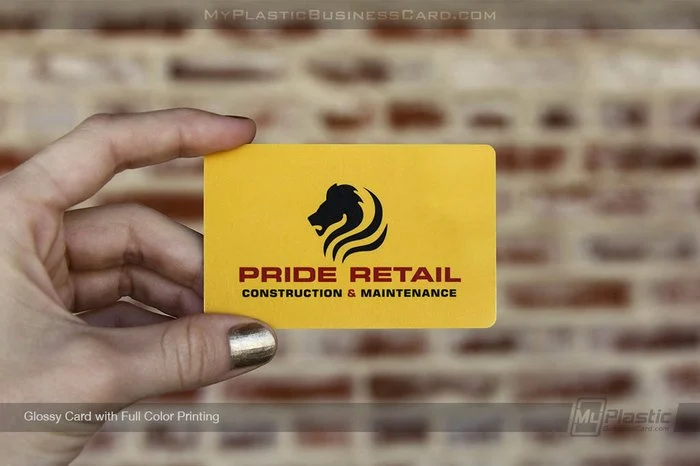
There’s also nothing wrong with getting straight to the point.
A bright card with a large logo and limited information can be incredibly effective, particularly when your brand already has recognizable colors.
The Pride Retail card is a good example. The yellow background does most of the attention-grabbing while the logo stays large and easy to identify.
For a card that’s going to be handed out quickly on a job site or during an estimate, simplicity has another advantage: people can understand who you are almost immediately.
Your business card doesn’t need to explain everything your company does. It needs to make people remember who to call.
9. Match the Card to Your Industry
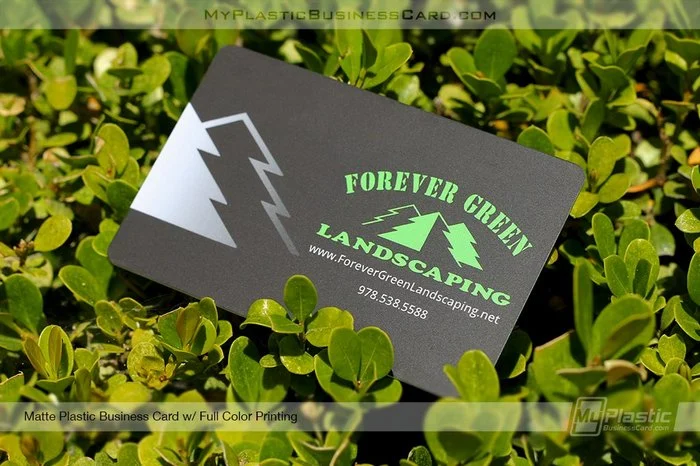
A good design can subtly reinforce what your company does.
Landscaping companies can lean into greens and natural settings. Concrete businesses can use stone-inspired textures. Excavation companies can work with earth tones. Roofing businesses can use rooflines and architectural elements.
The Forever Green Landscaping example shows how effective that connection can be. The green branding and tree logo make the company’s specialty immediately understandable.
You don’t need to be literal, but connecting your card’s visual language to your trade can make the overall brand feel more cohesive.
10. Turn the Card into a Review Tool With NFC
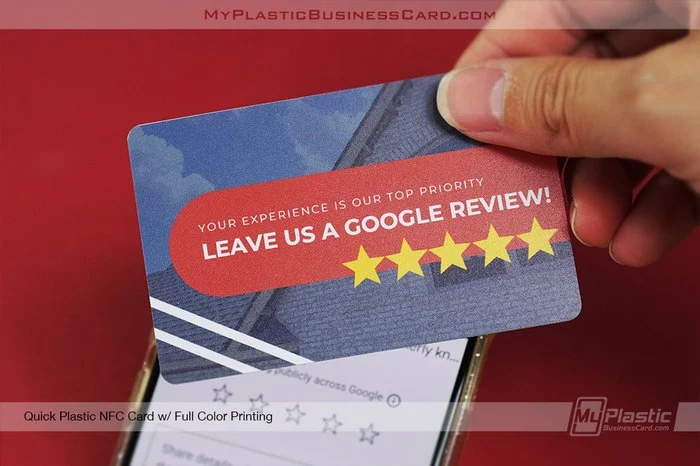
A business card can keep working after you’ve handed it over.
Plastic NFC cards can be programmed to direct customers to a digital destination with a tap. For contractors, one particularly useful application is connecting customers to a review page.
After wrapping up a successful job, a team member can present the card and give the customer an easy way to reach the appropriate page from their phone.
QR codes can serve a similar purpose, and using the card as a digital bridge gives it a job beyond simply displaying contact information.
You could also direct customers toward a portfolio, website, booking page, or other online resource depending on your business.
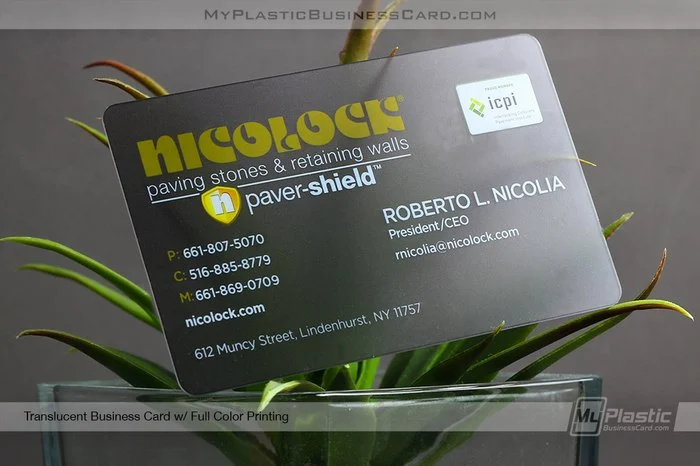
11. Use Translucent Plastic for Something More Unexpected
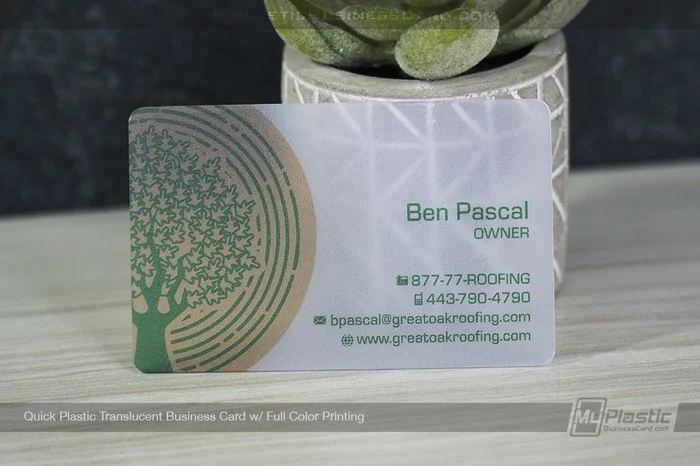
Translucent plastic business cards for construction companies sit somewhere between a traditional solid card and a fully clear design.
It allows light to pass through the card while still providing a visible base for full-color branding. The result feels modern without requiring an overly complicated design.
For contractors trying to differentiate themselves in a crowded local market, that small material choice can make the card itself more memorable.
The Great Oak Roofing and Nicolock examples show how translucent plastic can work with both understated and highly branded designs.
Best for: roofing companies, hardscape contractors, architects, landscape designers and modern construction brands.
12. Design the Card Around What You Want the Customer to Do Next
This may be the most important design choice of all.
Before deciding on matte versus glossy, clear versus solid or foil versus spot UV, ask one question:
What should someone do after receiving this card?
For one contractor, the answer might be “call for an estimate.” For another, it could be “look at our recent projects.” Another company may want customers to leave a review, scan a QR code or visit a specific service page.
Once you know the answer, build the hierarchy of the card around it.
Make the phone number easy to find. Give the QR code room. Keep the website readable. Don’t bury the most important information under decorative elements.
A construction business card can look incredible, but it still has a job to do.
Why Plastic Business Cards For Construction Companies Make Sense
Paper business cards work perfectly well in plenty of settings. Construction just isn’t always the gentlest environment for them.
Plastic business cards for construction companies provide a sturdier alternative for cards that may spend their time moving between offices, trucks, job sites, tool bags and customer homes.
But choosing plastic business cards for construction companies doesn’t mean every contractor ends up with the same card.
You can go bold or understated. Matte or glossy. Solid, clear or translucent. Add a QR code, custom cutout, foil, spot UV or NFC functionality. You can even use project photography to make the finished work part of the design.
That flexibility makes it possible to create a card that feels specific to your company instead of simply specific to your industry.
Build a Card That Works as Hard as Your Business
Your business card may be one of the smallest pieces of your construction company’s branding, but it travels places your truck wraps, signage and website can’t.
It gets handed directly to homeowners. It stays behind after estimates. It gets passed from one person to another when someone asks, “Do you know a good contractor?”
Make that little piece of your brand worth keeping.
Whether you want something straightforward and durable or completely custom plastic business cards for construction companies with cutouts, foil, QR codes, spot UV or NFC functionality, plastic gives you plenty of room to build something that’s distinctly yours.