

Plastic Business Cards vs. Paper Business Cards: Which One Makes the Better First Impression?
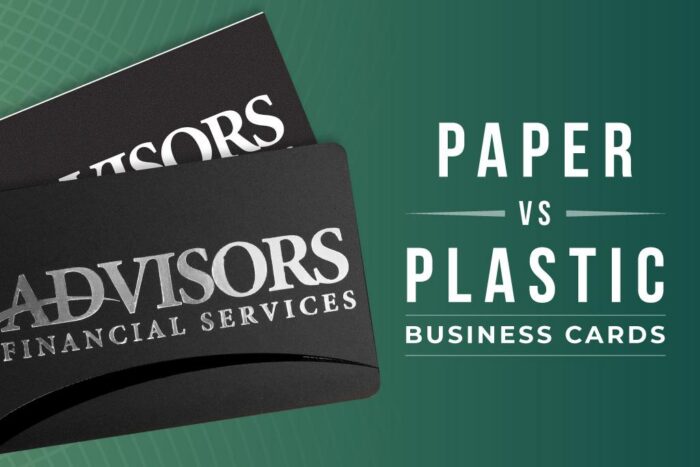
Plastic Business Cards vs. Paper Business Cards: The Quick Answer
Paper business cards are familiar, affordable, and easy to order in large quantities. But if your goal is to make a stronger impression, last longer in someone’s wallet, and give your brand a more premium feel, plastic business cards are the better choice.
Plastic business cards look and feel more like a credit card than a traditional paper card. They are durable, water-resistant, harder to damage, and more memorable when handed to a customer, client, or prospect. For brands that want to stand out, plastic offers a practical upgrade without jumping all the way to metal business cards.
In this guide, we will compare plastic business cards vs. paper business cards by durability, design, thickness, cost, and overall value.
What Are Paper Business Cards?
Paper business cards are the traditional option most people are used to receiving. They are usually printed on cardstock and can come in different thicknesses, coatings, and finishes.
Common paper business card options include:
- Standard cardstock
- Matte paper cards
- Gloss paper cards
- Soft-touch paper cards
- Cotton or recycled paper cards
- Extra-thick premium paper cards
Paper cards can look professional, especially when printed on a premium stock. The drawback is that paper is still paper. It can bend, crease, stain, tear, absorb moisture, fade, and wear down quickly when carried in a wallet, purse, glove box, or desk drawer.
For everyday networking, paper may be “good enough.” But for brands that want their business card to feel like a lasting part of their identity, paper often falls short.
What Are Plastic Business Cards?
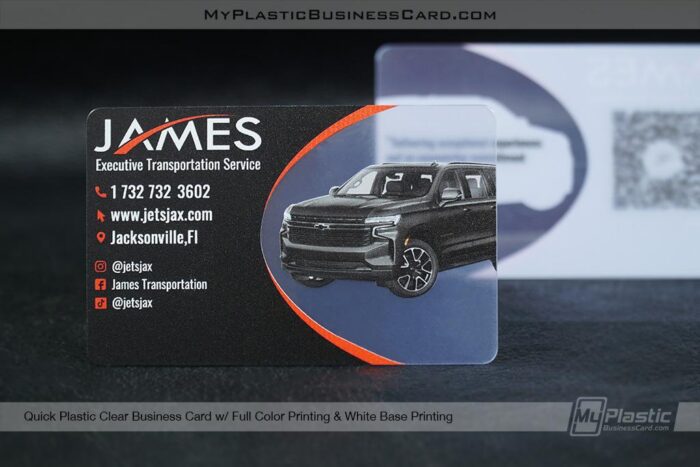
Plastic business cards are printed on durable PVC plastic instead of paper cardstock. They are typically similar in size and thickness to a credit card, which gives them a sturdy, polished, high-value feel the moment someone holds one.
At My Plastic Business Card, our plastic business cards are made from .76mm thick PVC plastic, which is the same general thickness people associate with credit cards. They can be printed in full color on both sides and customized with premium finishes, clear or frosted effects, QR codes, magnetic stripes, foil, spot gloss, and other add-ons depending on the product.
Plastic business cards are built to last. They are ideal for professionals and businesses that want a card people are less likely to throw away.
The Biggest Difference: Plastic Cards Last Longer
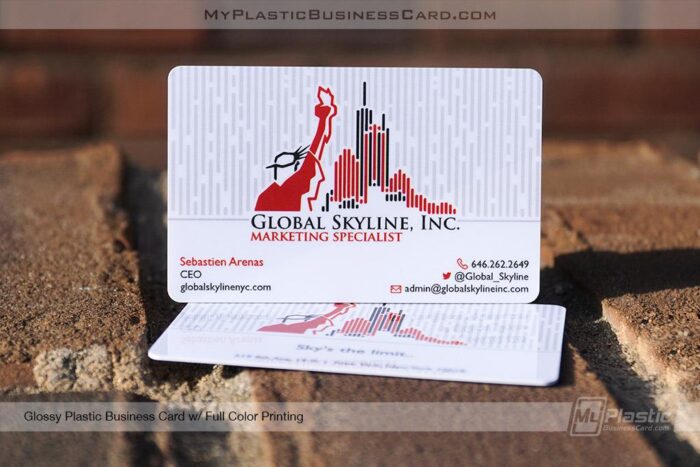
The most important difference between plastic business cards vs. paper business cards is durability.
A paper business card can look great when it first arrives, but it often starts showing wear quickly. Corners bend. Edges fray. Ink can scuff. Moisture can ruin the surface. After a few weeks in a wallet, many paper cards look old, even if the business is still fresh in the recipient’s mind.
Plastic business cards are different. It is designed to hold up against normal handling, wallet storage, moisture, and repeated use. It does not tear like paper. It does not wrinkle in the same way. It feels more permanent.
That matters because a business card is not just a piece of contact information. It is a physical reminder of your brand. If the card feels disposable, your brand may feel disposable too. If the card feels premium, sturdy, and intentional, it sends a much stronger message.
Plastic Business Cards Feel More Premium
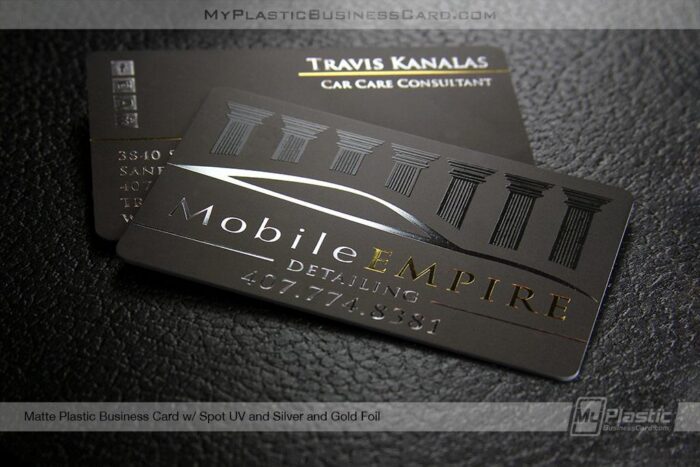
First impressions are emotional. Before someone reads every detail on your card, they feel it.
A plastic business card immediately communicates:
- Quality
- Creativity
- Confidence
- Professionalism
- Attention to detail
- A willingness to be different
That tactile reaction is one of the biggest advantages of plastic. When someone receives a thick plastic card, they often pause, look at it, and comment on it. That extra moment of attention is valuable.
Paper cards are expected. Plastic cards are noticed.
For real estate agents, contractors, coaches, consultants, fitness professionals, med spas, clubs, restaurants, membership programs, automotive businesses, photographers, and luxury service providers, that “wow” factor can make your introduction more memorable.
The Feel Difference: Paper Weight vs. Plastic Structure
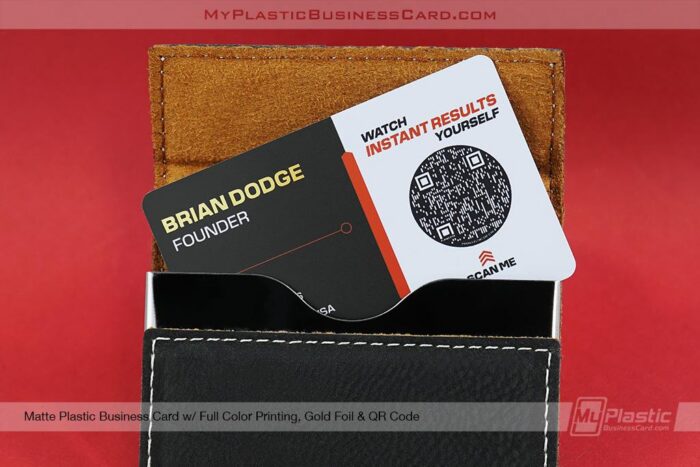
Paper business cards are often judged by paper weight, finish, and thickness. A heavier cardstock can feel more premium than a standard paper card, but it still has the familiar feel of printed paper.
Plastic business cards create a different impression. They have a firm, smooth, credit-card-like structure that feels more substantial the moment someone holds one. Instead of feeling like another printed handout, a plastic card feels like a branded object.
That difference matters because people often decide how they feel about your business before they read every detail on the card. A plastic card can make your brand feel more established, more intentional, and more memorable during the first interaction.
| Feature | Paper Business Cards | Plastic Business Cards |
|---|---|---|
| First impression | Familiar and expected | More distinctive and memorable |
| Feel | Depends on cardstock, coating, and finish | Firm, smooth, credit-card-like structure |
| Perceived value | Can feel professional, especially with premium stock | Often feels more substantial and custom |
| Brand impact | Communicates contact information | Creates a stronger physical brand experience |
| Best for | Simple networking and everyday handouts | Premium introductions, sales, loyalty, and standout impressions |
The takeaway: paper cards can feel professional, but plastic cards feel more intentional. They turn a simple business card into something that feels closer to a branded experience.
Cost Comparison: Plastic Business Cards vs. Premium Paper Cards
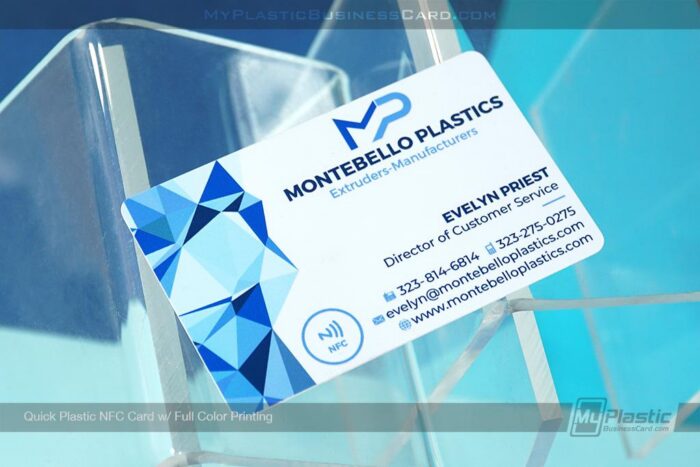
Basic paper business cards are usually the cheapest option upfront. If you only need a simple card to hand out in large quantities, paper can be a practical choice.
But the comparison changes when you look at premium paper business cards. Once you upgrade to thicker cardstock, special finishes, soft-touch coatings, painted edges, foil, or other premium details, the price of paper cards can rise quickly.
That is where plastic business cards become a stronger value than many people expect.
Plastic cards may cost more than basic paper cards, but they often compare well against higher-end paper cards because they already include a more substantial feel, better durability, and a more memorable presentation. Instead of paying extra to make paper feel more premium, plastic starts from a more premium place.
A simple way to think about it:
| Card Type | Typical Cost Level | What You’re Paying For |
|---|---|---|
| Basic paper business cards | Lowest upfront cost | Simple contact cards for everyday handouts |
| Premium paper business cards | Moderate to high cost | Thicker paper, coatings, finishes, and upgraded presentation |
| Plastic business cards | Moderate premium cost | A stronger, longer-lasting card with a more memorable feel |
The best choice depends on what you want the card to do. If you only need the lowest-cost option, paper usually wins. But if you want a card that feels premium, holds up better, and makes a stronger impression, plastic can offer better long-term value.
The takeaway: plastic business cards are not trying to compete with the cheapest paper cards. They compete with premium paper cards—and often deliver more impact for the money.
Why Plastic Business Cards Can Be a Better Value
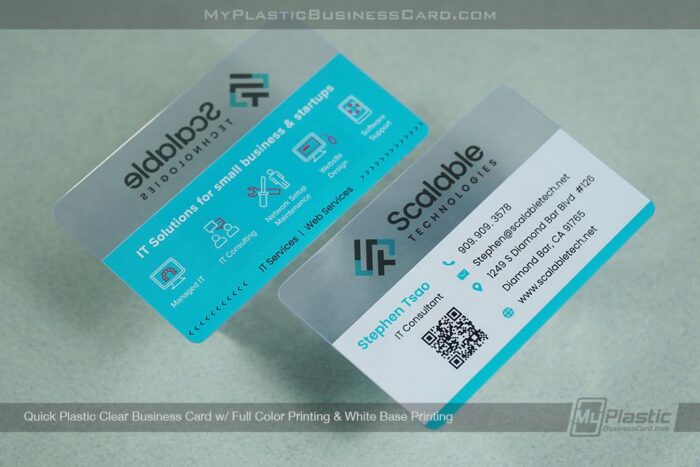
The cheapest business cards are not always the best value.
A low-cost paper card may save money upfront, but it may not create much impact. If someone tosses it, damages it, or forgets it, the card does not do its job.
Plastic business cards often deliver better value because they are:
- More likely to be kept
- More likely to be shown to others
- More resistant to everyday damage
- More memorable during a first meeting
- More aligned with premium brands
- More useful for QR codes, membership cards, loyalty programs, and appointment cards
Instead of thinking only about cost per card, think about cost per impression.
If a paper card costs less but disappears into a pile, it may not be worth much. If a plastic card gets saved in a wallet, shared with a friend, scanned with a QR code, or remembered after a meeting, it has done more work for your brand.
Plastic Cards Are Better for QR Codes, NFC, and Digital Connections
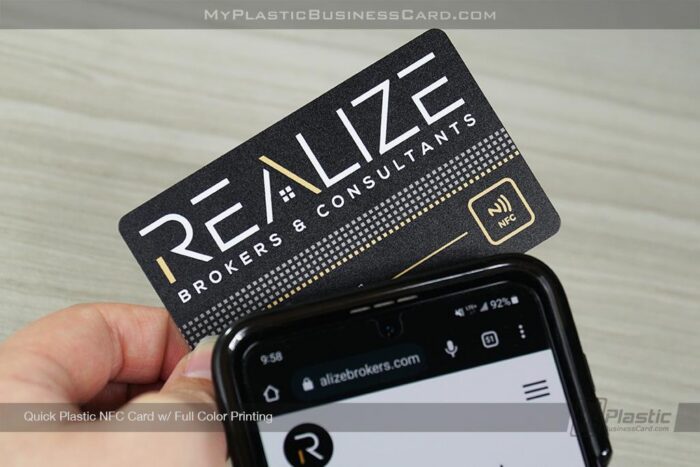
Business cards are no longer just a name, phone number, and email. Many modern cards connect directly to digital experiences through QR codes, NFC chips, or both.
A plastic business card can connect people to:
- Websites
- Portfolios
- Menus
- Booking pages
- Review pages
- Digital business cards
- Social profiles
- Lead forms
- Membership portals
- Loyalty programs
- Contact downloads
Plastic is a great material for QR code business cards because the card is more likely to stay clean, flat, and scannable. A bent or worn paper card can make a QR code look less polished or harder to scan. A sturdy plastic card helps protect the design and keeps the presentation sharp.
Plastic is also a natural fit for NFC business cards. With NFC, someone can tap your card with a compatible smartphone and instantly open your website, digital profile, contact card, menu, booking page, or another online destination. That makes the card feel more interactive and modern while still giving people something physical to remember you by.
For anyone using a business card as a bridge between offline networking and online conversion, plastic is a smart choice. It gives you the physical presence of a premium card with the digital convenience of QR and NFC technology.
Plastic Business Cards Are More Water-Resistant
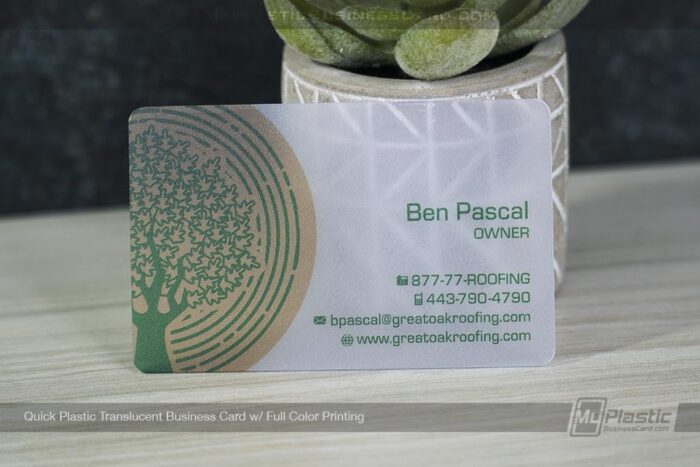
Paper and water do not mix.
A paper card can be damaged by rain, spills, sweat, humidity, or simply being left in a cup holder. Once the edges warp or the ink stains, the card no longer represents your business well.
Plastic business cards are far more resistant to moisture. That makes them especially useful for businesses that operate in environments where paper cards get damaged quickly, including:
- Contractors and home service companies
- Gyms and fitness studios
- Pool and spa companies
- Bars, restaurants, and cafes
- Outdoor brands
- Event vendors
- Automotive businesses
- Salons and med spas
- Membership-based businesses
If your customers are likely to handle your card in the real world—not just store it neatly in a desk drawer—plastic gives you a practical advantage.
Plastic Business Cards Offer More Creative Design Options
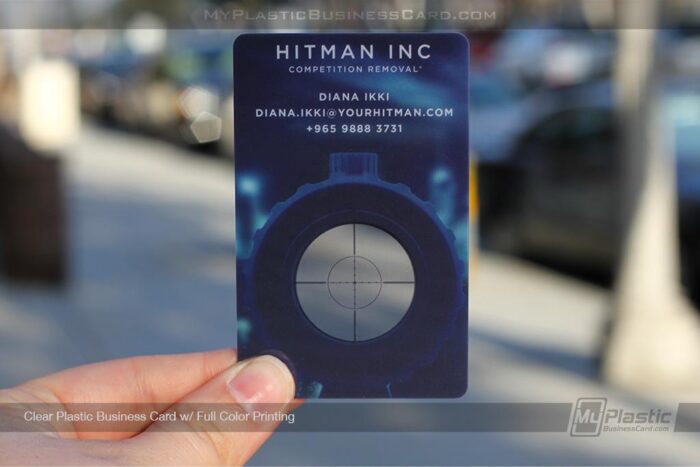
Plastic opens the door to design effects that are difficult or less practical with paper.
Depending on your chosen card style, you can create looks such as:
- Clear plastic business cards
- Translucent plastic business cards
- Bold full-color printing
- Glossy finishes
- Matte finishes
- Rounded corners
- Spot gloss accents
- Metallic foil details
- Magnetic stripe cards
- Membership card layouts
- VIP card designs
- Loyalty card designs
- QR code cards
This makes plastic a strong option for brands that want their business card to feel like more than a contact card. It can become a mini brand experience.
A paper card says, “Here is my information.”
A plastic card says, “This is my brand.”
When Paper Business Cards Still Make Sense
Paper business cards are not always the wrong choice. They can make sense when:
- You need the lowest possible upfront cost
- You are handing out thousands of cards casually
- You need a very fast, basic print run
- You want a simple card for internal use
- You prefer recyclable paper materials
- You update your information frequently
Paper is familiar and practical. For some businesses, that is enough.
But if you are using your card as a sales tool, a brand statement, a premium leave-behind, or a conversation starter, plastic is usually the stronger option.
Who Should Choose Plastic Business Cards?
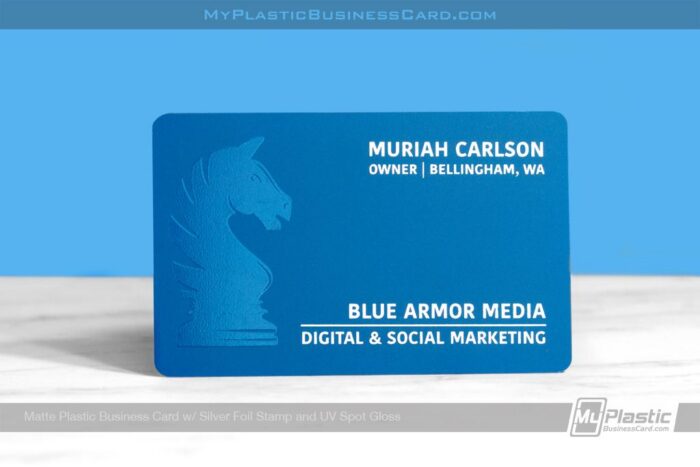
Plastic business cards are a great fit for professionals and brands that rely on strong first impressions.
They are especially useful for:
- Real estate agents
- Luxury service providers
- Contractors and builders
- Fitness trainers and gyms
- Med spas and salons
- Photographers and videographers
- Restaurants and hospitality brands
- Automotive companies
- Event planners
- DJs and entertainers
- Consultants and coaches
- Membership clubs
- Loyalty programs
- Trade show exhibitors
- Sales teams
If your business card needs to feel premium, survive real-world handling, and stand out from paper cards, plastic is worth the upgrade.
Are Plastic Business Cards Worth It?
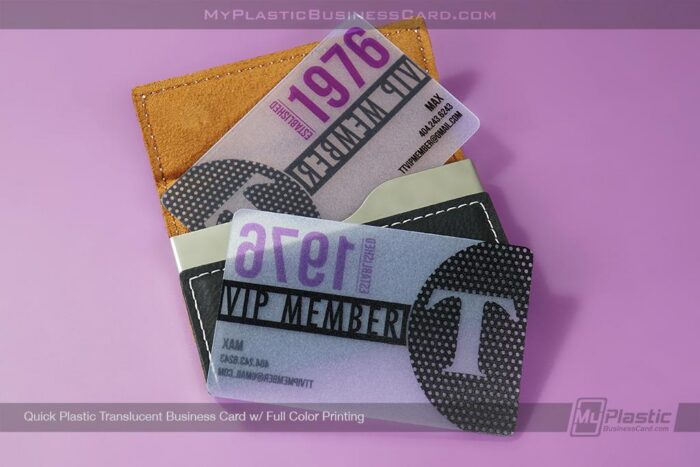
Yes—plastic business cards are worth it for businesses that want a more durable, memorable, and premium card.
They may not be the absolute cheapest option when compared with basic paper cards, but they offer stronger long-term value. Compared with premium thick paper cards, plastic can be surprisingly competitive in cost while offering better durability and a more distinctive feel.
Plastic business cards are especially worth it when your card is part of your sales process. If you hand someone a card after a consultation, meeting, event, open house, trade show, or service appointment, that card should help you get remembered.
A paper card can be ignored.
A plastic card is harder to forget.
Final Verdict: Plastic Business Cards Beat Paper for Durability, Impact, and Value
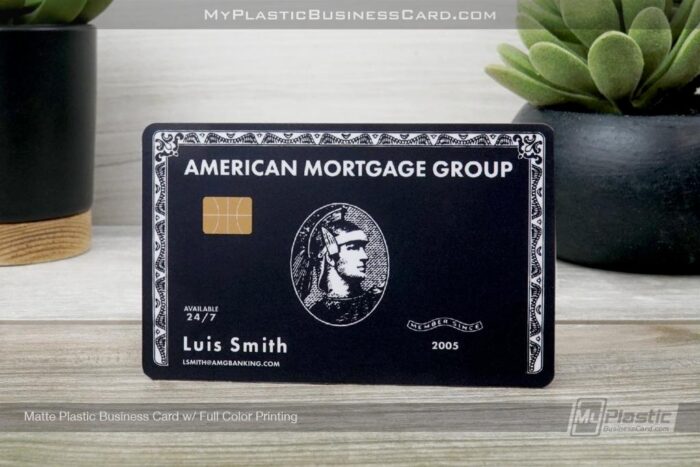
Paper business cards are common. Plastic business cards are memorable.
If you only need a basic card at the lowest possible cost, paper can work. But if you want your card to feel premium, last longer, resist damage, and create a stronger first impression, plastic is the better choice.
Plastic business cards give you the thickness and high-end feel people expect from premium paper cards, but with the added strength of PVC plastic. They are durable, water-resistant, professional, and designed to be kept.
For businesses that want their card to do more than share contact information, plastic is a smart investment.
Ready to upgrade from paper? Explore custom plastic business cards from My Plastic Business Card and create a card people will actually remember.
FAQ: Plastic Business Cards vs. Paper Business Cards
Are plastic business cards better than paper business cards?
Plastic business cards are better than paper business cards if you want a card that is more durable, water-resistant, premium-feeling, and memorable. Paper cards are usually cheaper for basic printing, but plastic cards offer stronger long-term value for brands that want to stand out.
How thick are plastic business cards?
Many plastic business cards are about .76mm thick, which is similar to the thickness of a standard credit card. That is roughly 30pt, making plastic cards comparable in thickness to many ultra-thick premium paper cards.
Are plastic business cards waterproof?
Plastic business cards are highly water-resistant compared with paper cards. They are made from PVC plastic, so they do not absorb moisture the way paper does. This makes them a great choice for businesses that want a card that can survive everyday handling.
Do plastic business cards cost more than paper cards?
Plastic business cards usually cost more than basic paper cards, but they can be very competitive with premium thick paper cards. When comparing plastic cards to premium paper cards, plastic can offer strong value because it is durable, long-lasting, and more likely to be kept.
Can plastic business cards have QR codes?
Yes. Plastic business cards are excellent for QR codes because the surface is sturdy and long-lasting. QR codes can link to your website, booking page, online menu, digital business card, portfolio, review page, or social profiles.
What businesses should use plastic business cards?
Plastic business cards are great for real estate agents, contractors, gyms, med spas, salons, restaurants, automotive businesses, photographers, consultants, coaches, membership clubs, loyalty programs, and any brand that wants a premium first impression.
Are plastic business cards the same size as regular business cards?
Many plastic business cards use CR80 dimensions, which are close to a standard credit card size. This gives them a familiar wallet-friendly shape and makes them easy to carry.
Why do people keep plastic business cards longer?
People often keep plastic business cards longer because they feel more valuable than paper cards. The credit-card-like thickness, durability, and custom design options make plastic cards feel less disposable and more useful.